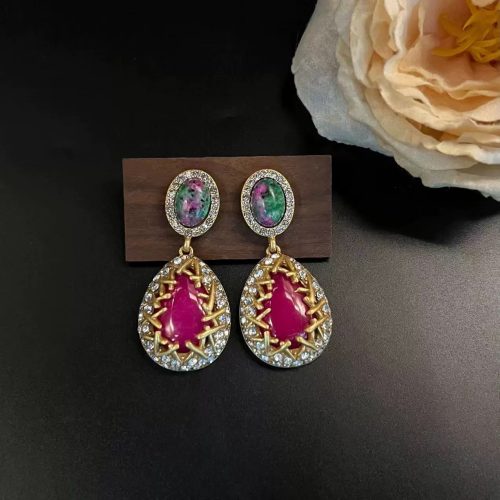
Are gold plated earrings hypoallergenic?
The lustre and fading of a gold-plated necklace: a dialogue about time and matter
In the world of jewellery, gold-plated necklaces seem to have magical charm – it gives the wearer a golden lustre and nobility at a relatively affordable price. Will this shining necklace fade and change colour over time? The answer to this question is much more complex and interesting than the simple “yes” or “no”.
The essence of gold plating technology: gold coat at the microscopic level
To understand why and how gold-plated necklaces change colour, we first need to understand the essence of its production process. Gold plating refers to the process of covering the surface of the base metal (usually copper, brass, silver or brass) with an extremely thin layer of gold. The thickness of this layer of gold is usually calculated in microns. The thickness of the gold layer of high-quality gold-plated jewellery may be 2-3 microns, while ordinary fashion jewellery may be only 0.5 microns or even thinner.
The electroplating process is carried out in an electrolyte, where gold ions are deposited on the surface of the underlying metal by electric current. The precision of this process, the purity and thickness of the gold layer, and the post-plating process together determine the durability and discolouration resistance of the gold-plated necklace. Even if it is the highest quality gold-plated jewellery, its gold layer is limited, and it will gradually show the traces of time under the test of time.

Colour change mechanism: a complex process of multi-factor action
The discolouration of gold-plated necklaces is not caused by a single cause, but by the combined action of various chemical and physical processes.
Oxidation is the main chemical process that causes discolouration. Although gold itself is not easily oxidised, there may be tiny pores in the gold-plated layer, causing the oxygen in the air to come into contact with the underlying metal. When copper, silver and other basic metals are oxidised, dark compounds are produced, which may seep through pores and diffuse to the surface, forming dark spots or discolouration areas.
Vulcanisation cannot be ignored either. Sulphides (such as sulphur dioxide) in the air will react with silver or copper to produce black silver sulphide or brown copper sulphide. This is why silver-based gold-plated jewellery is more likely to turn black when exposed to sulphur-containing substances (such as certain food, rubber or air pollution).
The physical process of wear and corrosion is equally important. The gold-plated layer will gradually wear out due to friction with skin, clothes and other jewellery. In daily life, the chemical components in cosmetics, perfumes, sweats and detergents will accelerate this process. Sodium chloride and fatty acids in human sweat are particularly corrosive and can gradually erode metal surfaces.
Electrochemical corrosion is a less discussed but important mechanism. When two different metals are present in electrolytes (such as sweat), the microbattery effect is formed, resulting in the corrosion of more active metals (usually basal metals). This is also the reason why gold-plated jewellery sometimes has dot corrosion.
Time Frame: Expected Management of the Process of Colour Change
The discolouration of the gold-plated necklace is not a sudden event, but a gradual process. Understanding this time frame helps to establish reasonable expectations.

High-quality gold-plated jewellery may remain unchanged for 1-3 years under normal wearing conditions, while ordinary fashion jewellery may begin to change in a few months. Daily worn necklaces usually show signs of wear faster than occasional earrings or brooches due to frequent contact with skin and clothes.
Discolouration often begins with the most common friction areas, such as the connection of the link, the buckle and the back of the necklace. The coating in these areas is the most wearable, resulting in the exposure of the underlying metal. The speed of discolouration does not develop linearly – once the coating is slightly damaged, the discolouration process may be accelerated because the exposed base metal is more prone to chemical reactions.
Quality difference: Why some gold-plated jewellery is more durable
Not all gold-plated necklaces are the same. The difference in quality is mainly reflected in several key aspects:
The thickness of the coating directly determines the durability. In international standards, Heavy Gold Electroplate requires a gold layer thickness of at least 2.5 microns, while ordinary gold plating may be only 0.5 microns. The thicker coating can provide better anti-wear and anti-corrosion protection.
The quality of the coating process is also crucial. Advanced electroplating technology can produce a more uniform coating with fewer pores. Some high-end brands use multi-layer electroplating technology, first coating a layer of nickel or palladium on the substrate as a barrier, and then plating gold, which can effectively prevent the substrate metal ions from moving to the surface.
The composition of gold alloy will also affect the resistance to discolouration. 24K pure gold is the least easy to change colour but is too soft. Usually, 14K or 18K gold alloys are used for gold plating. These alloys contain silver, copper, zinc and other metals. Although the hardness is increased, it may affect the discolouration resistance. Some manufacturers also add trace elements such as palladium or platinum to improve durability.
Maintenance science: an effective strategy to delay discolouration
Proper maintenance can significantly extend the lustre life of gold-plated necklaces. Here are some effective strategies based on material science:
Avoiding chemical contact is the key. Cosmetics, perfumes, hairspray, soaps and detergents all contain chemicals that may corrode metal surfaces. It is recommended to put on makeup and perfume first, and wait for it to dry completely before wearing jewellery. Be sure to take off your jewellery when swimming. The chlorine in the pool and the salt in the seawater will accelerate the degradation of the plating.
The correct cleaning method can restore the lustre without damaging the surface. Mild soapy water (a small amount of neutral pH detergent added to warm water) and a soft brush can remove grease and dirt. After cleaning, it must be thoroughly wiped dry with a soft cloth, because moisture residue will accelerate the oxidation process. There are special jewellery cleaners on the market, but it is necessary to make sure that they are suitable for gold-plated jewellery.
Proper storage is equally important. Jewellery should be stored separately to avoid friction with other items. Sealed bags or jewellery boxes with soft linings are ideal because they can limit air contact and slow down the oxidation process. Adding anti-chu paper or silicone desiccant can further control the humidity.
Regular maintenance should not be ignored. Professional jewellers can provide re-gilding services. When the plating layer is obviously worn out, this is the most effective way to restore the original lustre of the necklace. For high-quality gold-plated jewellery, re-electroplating every few years can greatly extend its aesthetic life.

Brass gold-plated tassel enamel earrings vintage new Chinese style flower long national style earrings
When discolouration has already occurred: repair and innovative response
Even if the gold-plated necklace has changed colour, it is not irreparable. There are many ways to deal with this problem:
Professional cleaning may restore some lustre. Jewellers have professional cleaning equipment and reagents that can remove surface oxidation without damaging the residual coating. For silver-based gold-plated jewellery, the use of a special silver jewellery cleaner may be effective, but you need to test carefully and try it in an inconspicuous place.
Re-gilding is a thorough solution. This requires the removal of the remaining coating and surface oxides, and then re-plate. The cost depends on the price of gold and the complexity of the process, but for necklaces with emotional value or unique designs, it is often worth the investment.
The creative transformation provides another way of thinking. Some designers specialise in integrating colour-changing gold-plated jewellery into new designs and using their retro sense to create unique works. Alternatively, the necklace can be changed to other purposes, such as decorating handbags or making wind chimes, giving it a new form of life.
Conclusion: Aesthetic philosophy of accepting change
While we pursue eternal lustre, we may also need to rethink our attitude towards “colour change”. Just as copper green characterises antiques, the subtle changes of gold-plated necklaces may also record the wearer’s life history – the salt of beach holidays, the sweat of hard work, and the fragrance of special occasions.
What is really precious may not be the never-changing lustre of the metal, but the memory bond established between the object and the wearer. A slightly discoloured gold-plated necklace may carry more stories and emotional values than the flawless new products in the window.
In this sense, the discolouration of the gold-plated necklace is not a symbol of failure, but a proof of real wear, a visual record of the passage of time, and a transformation process of ordinary items that gain uniqueness through use. It reminds us that beauty exists not only in perfection, but also in the traces left by time.
Whatsapp :
Email :
You can contact our website at Beauty Jewels: Fashion Necklace
Leave your comment
Related posts